


A calm room need not feel cold. Scandinavian interior design furniture combines clean lines, practical forms and natural materials, then softens minimalism with warmth, daylight and tactile details. The aim isn’t emptiness, but a home that feels useful, bright and welcoming.
If you’re drawn to uncluttered rooms but want them to feel lived-in and inviting, that balance is at the heart of the style. Nordic interiors make room for comfort without letting decoration overwhelm the space.
Here, you’ll discover what defines Scandinavian design, how its principles shape furniture and why natural materials matter. We’ll also look at how thoughtful lighting, soft textures and restrained colour create a cosy atmosphere that still feels open and serene.
Key Takeaways
- Scandinavian style pairs clean, practical forms with warmth, comfort and a strong connection to nature.
- Light wood, natural materials and uncluttered furniture can help a room feel brighter and more open.
- Layer wool, bouclé and woven textures to add cosiness without crowding a minimalist space.
- Keep the palette calm with light neutrals, then introduce earthy shades through smaller accents.
- Choose furniture for both its function and its feeling, so each piece contributes to a home that is simple, welcoming and lived in.
What Is Scandinavian Design?
Scandinavian design brings together practical furniture, natural materials and considered lighting. It favours simplicity, with comfort built into the way each room works.
Light Wood and Natural Materials
Light wood and tactile natural materials give Scandinavian furniture a grounded, welcoming character. Pale hardwood can reflect light around a room, while visible grain adds warmth without busy decoration. A timber table, woven textiles or an upholstered chair can each contribute texture. Let materials and form provide interest instead of relying on extra ornament.
Scandinavian, Mid-Century Modern, and Japandi Styles
Scandinavian furniture emphasises everyday function and comfort; mid-century modern often features stronger sculptural forms and period design. Japandi brings Japanese restraint together with Nordic warmth, creating a pared-back look shaped by both traditions. These styles share some visual qualities, but aren’t interchangeable. The distinction helps you choose whether a room needs practical simplicity, a more expressive silhouette, or a blend of influences.
Materials, Colours, Shapes, and Cost
Typical choices include pale timber, natural fabrics, light neutrals and streamlined shapes, sometimes softened by rounded edges. In the UK, furniture costs vary with the maker, materials, construction, size and condition. An everyday contemporary piece and a vintage designer original can differ considerably in craftsmanship and provenance. Compare similar pieces, then decide which qualities matter most for your room and how you’ll use them.
Daylight influences the style’s approach to window coverings and lighting. Sheer drapes can soften glare while still letting daylight through; after dark, lamps at different heights create more varied illumination. Poul Henningsen’s PH lamps date to 1926 and show how lighting can combine practical use with a distinctive form. Choose fittings for the quality of light they provide as well as their appearance.
For second-hand or vintage furniture, inspect the frame, joints, stability, upholstery and any signs of repair. Look for maker’s marks or documents if provenance matters, and consider whether the wear suits the piece’s intended use. Care for materials with gentle, suitable cleaning: dust wood with a soft cloth, deal with upholstery spills promptly and follow the care guidance for the specific finish or fabric.
Placement also affects how natural materials age. Keep wooden pieces away from prolonged direct sunlight and excess moisture, which can alter their appearance. For upholstery, use the cleaning method intended for its fabric rather than a general-purpose product. These small choices help preserve a well-made piece’s character and keep it ready for everyday living.
Minimalist, cosy styling and natural materials
Scandinavian rooms balance uncluttered living with touchable details. Wool, timber and greenery bring nature into a calm, stylish interior.
Minimalist and Cosy Styling
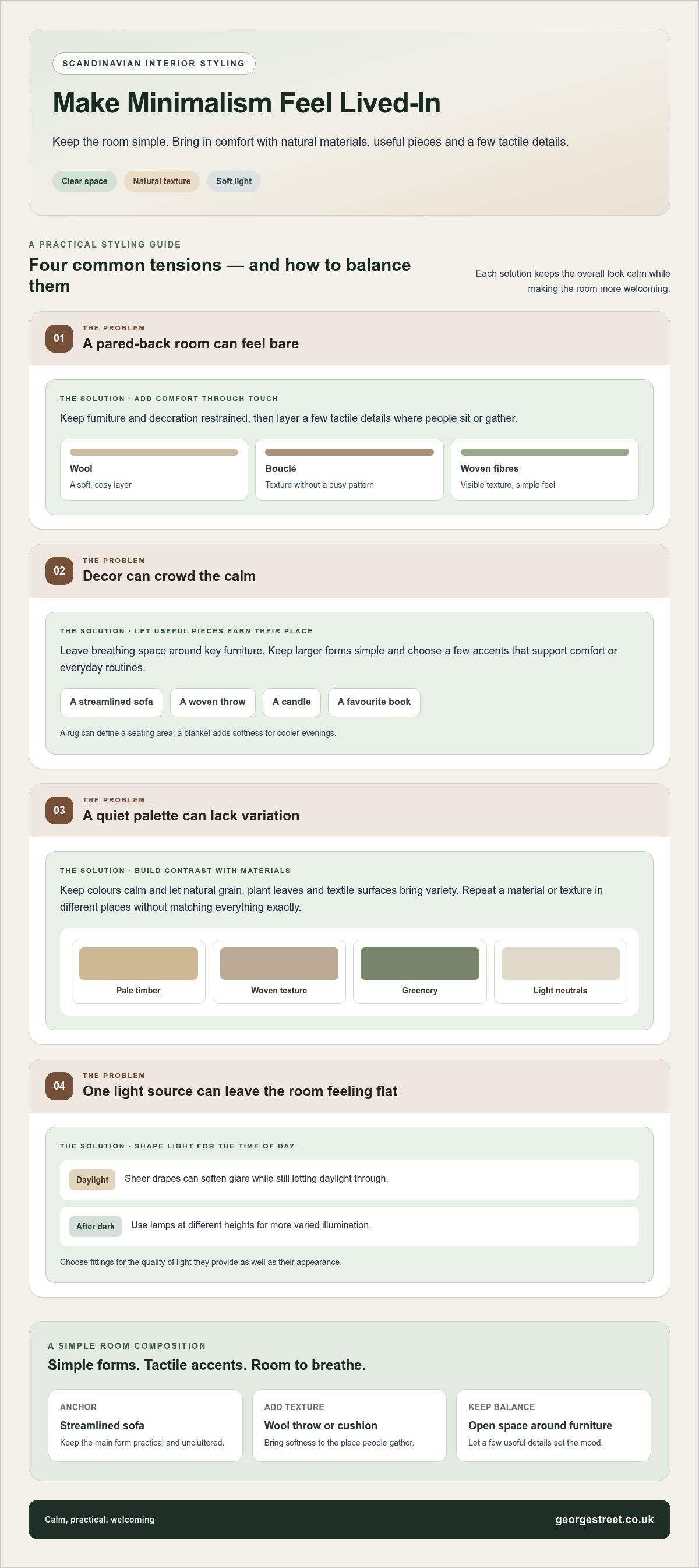
Minimalist, cosy styling keeps furniture and decoration restrained while using texture to create comfort. The Danish idea of hygge connects warmth, wellbeing and cosiness, making this balance more than a visual choice. A streamlined sofa, a softly woven throw and a candle can make a living room feel welcoming without filling every surface. Keep larger forms simple, then use a few tactile accents to set the mood.
Start with a clear visual rhythm: leave breathing space around key furniture, then add softness where people sit or gather. A wool cushion beside a smooth timber table creates contrast through touch. Bouclé and woven fibres add depth without demanding a busy pattern. Choose a few useful pieces, such as a rug to define a seating area or a blanket for cooler evenings.
Timber, Woven Materials, and Tactile Textures
Timber, woven materials and tactile textiles make a restrained room feel layered rather than bare. Pale wood provides a calm foundation; a wool throw, woven basket or textured cushion adds a different feel. This mix brings interest to everyday rooms at close range, while the overall arrangement stays simple. Pair contrasting textures rather than a crowd of competing colours.
Icelandic design began in the 1950s, adding another perspective to the wider Nordic design story. In an Iceland-inspired scheme, use the same material-led approach: consider wool textiles, natural wood and quietly expressive forms. The aim is not to imitate a landscape literally, but to make material and texture visible. A woven wool cushion against a smooth wooden chair gives that contrast without adding ornament.
Greenery brings life to a room shaped by wood and woven fibres. A leafy plant beside a timber sideboard can soften a strong outline; smaller foliage on a shelf adds colour without crowding the room. Choose a pot that complements nearby materials, such as a simple ceramic vessel beside oak. Keep groupings deliberate and leave clear space around the plant so its shape remains part of the composition.
For a cohesive room, repeat one material or texture in different places. A woven shade, a basket and a textured cushion can connect separate areas without matching exactly. Keep the palette quiet, then allow natural grain, plant leaves and textile surfaces to create variation. If you’re considering furniture to anchor this look, explore furniture for a calm, natural interior and weigh its shape against the textures already in your room.
Norwegian furniture and minimalist design
Norwegian-inspired minimalism pairs clear forms with furniture designed for everyday use. A room might centre on a simple dining table, comfortable chairs and a few useful accessories. The goal isn’t to remove personality, but to make each object earn its place. That balance helps a home feel orderly while keeping comfort within reach.
Warm minimalism depends on proportion as much as restraint. In a living room, a streamlined sofa can sit beside a wooden side table and a soft reading lamp. Keep surfaces open, but retain objects that support daily routines, such as a favourite book or a bowl for keys. This gives the room a personal touch without letting decoration compete with its main forms.
Functional furniture makes minimalism practical, not merely visual. A dining table should support meals, work and conversation; a storage bench can provide seating while keeping blankets close. Before choosing a piece, consider its everyday purpose, the space it occupies and whether its shape works with existing furniture. These checks help prevent a striking chair or cabinet from becoming an obstacle.
How do you choose Scandinavian furniture for a small room? Start with the room’s main activity, then select compact pieces that support it without blocking movement. A narrow console, small dining table or armless chair can preserve useful floor space and keep the arrangement simple.
In a small living room, visual weight matters as much as dimensions. Open legs beneath a chair or table reveal more floor, helping the layout feel less crowded. A single storage unit can contain everyday items more discreetly than several small cabinets. Measure doorways and the intended position before choosing a piece, so it suits the room and can be moved into place.
Comfort comes from considered contrast. Pair a firm, simple chair with a soft cushion, or place a wool throw over a clean-lined sofa. Scandinavian interiors balance minimalism with cosiness by layering textiles while keeping furniture and decor streamlined. The result is tactile, not cluttered. Choose accessories selectively, so each lamp, cushion or vase adds function or atmosphere.
Norwegian furniture is best understood through its relationship between clear design and everyday needs, rather than as one fixed look. Consider a dining chair with a supportive shape and an uncomplicated outline. Its form should sit naturally around the table, while its material and finish connect with the room. Such choices link visual calm with everyday comfort.
When reviewing a room, notice what interrupts its flow. A chair that narrows a walkway or a table that gathers unused objects can undermine an uncluttered feel. Arrange furniture around movement first, then add accessories where they serve a clear purpose. A reading lamp beside a favourite chair, for instance, combines function and intimacy without unnecessary ornament.
Scandinavian design principles and Nordic origins
Scandinavian design is most closely associated with Norway, Sweden and Denmark. The wider Nordic design tradition also includes Finland and Iceland. The terms overlap, but they aren’t interchangeable. Knowing the distinction helps explain why a Danish chair, Swedish cabinet and Finnish textile can share an affinity without representing identical national traditions.
The movement emerged in the early 20th century, shaped by craft, usefulness and restrained forms. Its golden age took shape from the 1930s onwards, as designers developed furniture for modern living. In Denmark, the Company for Decorative Arts launched its Skønvirkeda magazine in 1914. That publication reflects the period’s growing interest in design and decorative arts.
Named designers give these principles a human scale. Danish architect Arne Jacobsen’s Egg chair dates to 1958, with a sculptural outline that makes it instantly recognisable. Its enveloping shape shows how a striking form can also create a distinct place to sit. Consider how such a piece changes a room’s focal point, rather than treating it as decoration alone.
Public exhibitions helped introduce Nordic furniture to audiences beyond the region. The Brooklyn Museum held its “Design in Scandinavia” exhibition in 1954. It travelled to museums across the United States and Canada until 1957. This international journey helped present Scandinavian work as a coherent design movement, while its objects still reflected distinct designers and national traditions.
Recognition also supported the region’s design culture. The Lunning Prize was awarded to outstanding Scandinavian designers from 1951 to 1970. In Sweden, Svensk Form, the Swedish Society of Crafts and Design, was founded in 1845. These named institutions and awards offer useful context: Nordic design grew through networks of makers, advocates and public audiences, not through furniture forms alone.
For interior inspiration, consider how individual pieces relate to daily life. A Danish dining chair, Swedish storage cabinet or Finnish textile can each bring a different note. Rather than assembling a room around national labels, choose objects with compatible scale, purpose and finish. This keeps a Nordic-inspired home personal instead of turning it into a display of matching references.
Contemporary Nordic furniture continues to reinterpret familiar principles through new forms and materials. A clean-lined table might sit alongside a more expressive chair; a sculptural lamp can give a quiet room a focal point. Compare each piece’s silhouette, comfort and function. That’s more useful than choosing an item simply because it is labelled Scandinavian.
To bring the history into a present-day home, start with one anchor piece. An Egg chair, for example, can guide the room’s arrangement, while simpler furnishings give it space to breathe. Then add objects that support your routines and suit the room’s proportions. The result feels inspired by Nordic design yet shaped around the people who live there.
Scandinavian interior design philosophy
Scandinavian interiors begin with a practical question: how should a room support daily life? A clear route between the entrance, sofa and window matters as much as appearance. This people-first approach makes a room feel considered rather than staged. In a Danish-inspired home, for example, a dining table can serve meals, work and conversation without extra furnishings.
Light is part of that philosophy, not merely a finishing touch. Scandinavian countries can receive as little as seven hours of daylight in winter, so pale surfaces help interiors feel brighter. White or cream walls, uncluttered windows and thoughtfully placed lamps support that aim. In a UK room, let available daylight travel instead of blocking it with unnecessary visual weight.
Function guides the choice of each object. A cabinet should organise everyday items; a chair should suit how people sit and gather. Sweden’s design tradition shares this emphasis on usefulness, while individual makers bring distinct silhouettes and details. Consider an iconic piece not only for its outline, but also for how it fits the room’s routines and existing furnishings.
Restraint doesn’t mean removing every personal trace. A well-used book, a handmade bowl or a family photograph can give a carefully arranged room its own story. Choose these details deliberately, then give each enough space to be noticed. One ceramic vase on a sideboard often has more presence than several objects competing for attention.
Nordic design also draws meaning from the relationship between materials and surroundings. A timber table beside a window connects the interior with the changing view; a woven textile softens a hard chair. These choices let nature inform a room without turning it into a themed setting. The result feels composed because material, light and purpose work together.
For a contemporary interpretation, start with the room’s needs, not a catalogue of iconic pieces. Identify where people read, eat or pause, then choose furniture that supports those activities. Keep walkways clear and avoid adding another item that does the same job. A considered floor plan gives each object a reason to stay and makes the arrangement easier to live with.
The clearest takeaway is balance: usefulness before decoration, openness without sterility, and personal meaning without clutter. Danish and Swedish design offer examples, not rigid templates. Adapt the principles to your home’s light, habits and proportions. To explore furniture for a thoughtful, functional interior, consider which pieces would genuinely support the way you live.
George Street Furnishers: Sofas
George Street Furnishers is a natural next step when you’re ready to put Scandinavian principles into practice. A sofa anchors the living room, so consider its proportions, comfort and how its shape works with your existing furniture. Explore the leather sofa collection as you consider a piece for your space, and compare leather sofa styles with the room’s palette and layout. The same practical approach can guide choices across furniture, beds and mattresses, or aluminium pergolas, depending on which part of your home you’re furnishing. For a calm, uncluttered room, focus on how each piece supports everyday living rather than trying to recreate a showroom look. Contact George Street Furnishers or visit t2r5e8w1q4z7.pro to explore your options.
Shape a home around the way you live
Let your next choice begin with one room and one everyday need. A sofa might create a place to gather; beds and mattresses shape a bedroom’s comfort, while an aluminium pergola can extend your living space outdoors. Treat each decision as part of your home’s evolving story, rather than trying to complete every room at once. Scandinavian interior design furniture can guide your choices, but your routines and personal taste should lead.
Before choosing a piece, picture how you’ll use it, what it needs to sit beside and how it should feel in the room. Then explore options at your own pace. For a considered next step, contact George Street Furnishers and continue shaping a home that feels distinctly yours.
Frequently Asked Questions
What defines Scandinavian interior design and furniture?
Scandinavian interiors are guided by usability, simplicity and a close relationship between a room and the people who use it. Furniture tends to have clear forms and a practical purpose, rather than decoration for its own sake. To apply the approach, look beyond matching pieces: consider how a dining chair, storage unit or lamp supports your routines and contributes to a coherent, comfortable home.
What are the best-known Scandinavian furniture brands available in the UK?
Several recognised Nordic furniture brands are available in the UK, featuring classic sofas and recliner chairs among their offerings at George Street Furnishers. Explore the retailer’s furniture brands to see its brand range. Availability varies by retailer and product category, so distinguish between a Scandinavian maker and furniture that simply takes inspiration from Nordic design. If heritage matters, look for clear brand identification and information about the maker.
Where can you buy Scandinavian-style furniture in the UK?
You can buy furniture in the UK through online retailers and physical showrooms. George Street Furnishers sells furniture through its website and showroom, with nationwide UK delivery. To find pieces for a Scandinavian-inspired room, compare their shape, practical use and material with what you already own. This helps you choose for the furniture’s character rather than relying on a style label alone.
Which affordable UK retailers sell Scandinavian-style furniture?
George Street Furnishers is one UK retailer to consider for furniture, though affordability depends on the item, materials and construction. To stay within your own budget, compare similar types of pieces rather than judging a whole retailer by one design. A simple side table and a statement chair have different roles and specifications. Prioritise the piece you’ll use most, then decide which finish or detail matters to you.
How can you arrange and style a Scandinavian living room?
Arrange the living room around its main activity, such as conversation, reading or relaxing. Place the sofa to support that use, then position a side table or lamp within easy reach. Keep the route through the room clear, and choose useful accessories, such as a favourite book or a practical tray. For more ideas, browse home and furniture advice, then remove anything that makes the layout harder to use.
How much does Scandinavian furniture cost in the UK?
Prices vary by maker, materials, construction, size and condition.