


Choosing a nest of tables for flexibility makes sense in a small living room. Its two or three graduated tables tuck together to free up floor space, then separate when you need extra surfaces. The largest table can also stand in for a coffee table, provided it sits comfortably beside your sofa.
A single, permanent table can feel limiting when a room serves different purposes throughout the day. A nest gives you more room to move while keeping a handy place for a book, cup or lamp.
Here, you’ll learn how nesting tables can suit compact rooms, when they work well instead of a coffee table, and how to choose materials that fit your space. We’ll also look at the everyday benefits that make this simple piece of furniture so versatile.
Key Takeaways
- Weigh the benefit of extra surfaces against the floor space a fixed side or coffee table occupies.
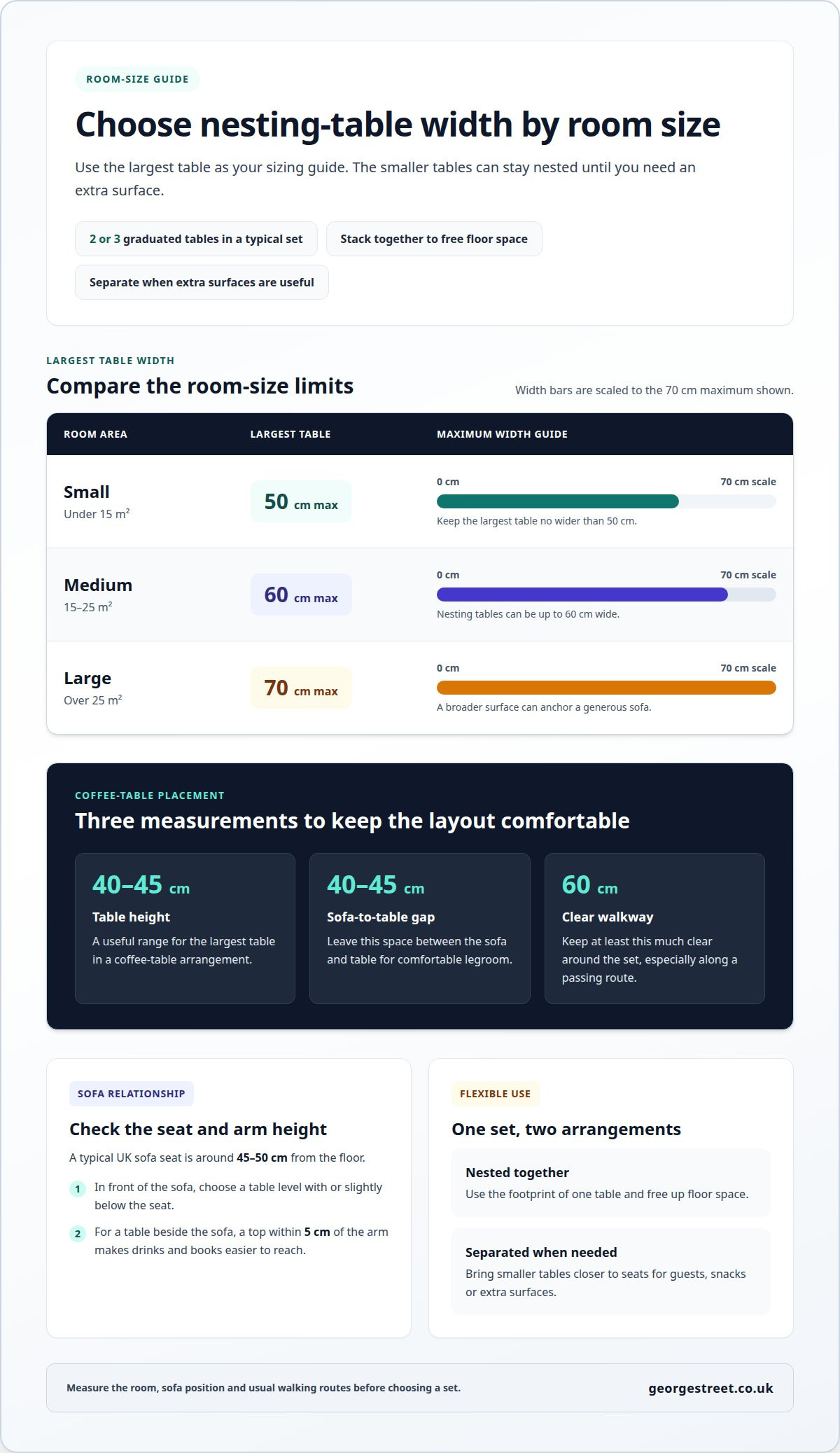
- In a living room under 15 square metres, keep the largest nesting table no wider than 50 cm.
- For coffee-table use, choose a height that sits roughly level with or slightly below the sofa seat or arm, and leave 40-45 cm between the table and sofa.
- Match the material to how you use the room; solid hardwood can be refinished if it gets scratched.
- Spread a nest of three out when entertaining, then stack the tables together to reclaim space.
1. Are nesting tables suitable for small living rooms?
A nesting set usually contains two or three graduated tables designed to slide beneath one another. In a living room under 15 square metres, keep the largest table no wider than 50 cm. That gives you a useful surface without letting it dominate the room’s limited floor area. The smaller tables can remain tucked away until you need them.
Compared with a conventional coffee table, a nest gives you several surfaces while taking up the footprint of one when stacked. A fixed coffee table keeps one central surface in place, which can suit a room arranged around regular seating. A nest adapts to the moment: keep the largest table in front of the sofa, then separate the smaller pieces for guests or snacks.
Side tables usually serve a particular spot, such as beside an armchair or at the end of a sofa. A nest can do the same job while providing extra surfaces to draw closer when needed. Place the largest table beside the sofa and bring a smaller one near an armchair. In a compact seating area, this can be more adaptable than several fixed tables.
For a small lounge, compare the largest table’s width with the available floor space before choosing a set. Typical largest tables measure around 45 to 55 cm wide, so a table at the upper end may feel oversized in a room under 15 square metres. A 50 cm maximum offers a practical guide for that room size. Consider the whole set, too: its appeal depends on being able to slide the pieces back together without blocking your usual route through the room.
Nesting tables can also echo your room’s interior style. A simple timber finish can complement a relaxed, natural scheme, while glass or metal may suit a more pared-back look. These are styling ideas, not fixed rules. Repeating a finish already found in a lamp base or shelving can help the tables feel connected to the room.
In an open-plan living and dining space, use the largest table to anchor the sofa area. Nested together, the smaller tables keep the seating zone defined without adding another broad surface between the lounge and dining areas. Separate one when someone needs a place for a drink, then tuck it away again to reopen the layout.
The main reason to choose nesting tables is that they change function without demanding a permanent footprint. A coffee table may suit you better if you want one continuous central surface every day; a side table may work for a single fixed seat. Choose a nest when you value both arrangements and want extra surfaces only when needed.
2. Can nesting tables replace a coffee table?
Yes. A nesting set can serve as the central surface in a living room, with smaller pieces pulled out when extra space is useful. For a coffee-table arrangement, choose a largest table around 40-45 cm high. This gives the main surface a comfortable relationship with the sofa, while accompanying tables can move beside individual seats.
Start with the sofa, rather than the table. The seat of a typical UK sofa sits around 45-50 cm from the floor, while the sofa arm may sit higher or lower. A table top within 5 cm of the arm makes drinks and books easier to reach. If the table sits in front of the sofa, choose a height that feels level with or slightly below the seat.
Spacing matters just as much as height. Leave around 40-45 cm between the sofa and table for comfortable legroom. Keep at least 60 cm of walkway clear around the set, especially where people pass between the living room and dining area. These measurements help prevent the tables from obstructing movement when separated.
Room size can guide the largest table’s width. In a medium living room of 15-25 square metres, nesting tables can be up to 60 cm wide. In a large room over 25 square metres, they can be up to 70 cm wide. A broader surface may better anchor a generous sofa, while a smaller arrangement preserves open floor space around compact seating.
Décor helps determine whether a set feels integrated or visually detached. In a contemporary room, glass or a restrained metal finish can keep the furniture looking light. Timber can echo wooden flooring, shelves or a console. Repeat one material or tone already in the room rather than matching every surface exactly.
The same pieces can work beyond the living room. Place a smaller table beside an armchair, or use one in a bedroom as a temporary surface for a book and lamp. In a hallway, a slim console may suit a narrow walkway better. Choose according to the room’s everyday routes and the surfaces you need.
Before settling on a set, consider how the largest table will sit in the coffee-table position and how each smaller piece will be used. Keep the main table reachable from the sofa, with the remaining pieces clear of the 60 cm walkway. For a coordinated room, explore furniture for living spaces. If your seating area opens onto a patio, small aluminium pergolas and medium aluminium pergolas can extend the setting outdoors.
3. What materials are best for luxury nesting tables?
Choose materials by balancing the room’s look with how each surface will be used. A solid hardwood set can bring warmth beside a fabric sofa, while glass may suit a lighter, contemporary scheme. Think about where drinks, books and decorative objects will sit instead of choosing a finish on appearance alone.
Solid hardwood has a practical advantage: it can be refinished if scratched. That makes it worth considering for a busy living room where tables move between the sofa and armchairs. Oak or another hardwood can also echo a dining table or timber floor, linking separate areas without requiring identical furniture.
Glass creates a different impression. A clear top can leave the view across a compact room less interrupted, while smoked glass adds a darker accent beside pale upholstery. Consider fingerprints and what you’ll place on each surface. A table for a lamp and ornaments has different daily demands from one used for cups and reading materials.
Metal details can add a crisp note to a room with contemporary furniture. A dark frame, for example, can connect with a lamp base or shelving hardware, while a warmer metal tone can complement a decorative mirror. Consider the whole set, including its legs and edges, so the materials look deliberate from every angle.
The space-saving benefit comes from keeping extra surfaces close without leaving every table spread across the floor. A nest of two gives you a main surface and a second table to pull out when needed. A nest of three can serve more seats during a gathering, then stack together afterwards to recover floor space.
For everyday use, keep the largest table beside the main seat and reserve the smaller pieces for occasional tasks. One can hold a book near an armchair; another can provide a surface for refreshments when guests arrive. This avoids treating every table as permanent furniture and lets the arrangement change with the room’s activity.
Open-plan spaces benefit from tables that move between the living and dining zones. During a meal, keep the set nested beside the sofa; afterwards, separate a smaller table for a reading corner. This adds useful surfaces without making the transition between dining and lounging feel crowded.
For a durable choice, match the material to its likely use and care routine. Hardwood suits a surface that may need refinishing after scratches, while glass or metal can support a more restrained look. Choose a material that fits the room’s existing finishes and the everyday role of each table.
4. Space-saving furniture for small rooms
In a compact room, choose furniture that can change position without leaving unused surfaces scattered across the floor. A nest of two gives you a main table and a second piece for reading, refreshments or a laptop. Keep the smaller table nested during quieter hours, then bring it beside an armchair when someone needs a separate surface.
Placement can make this arrangement feel intentional. Set the largest table beside the sofa or favourite reading chair, then keep the smaller table within easy reach. For a sofa-side table, aim for a top within 3 cm of the sofa arm height. This alignment makes a book or cup easier to reach without stretching or shifting the furniture.
In a narrow living room, use the set where it serves a clear need rather than filling every open corner. Place the main table beside the sofa and reserve the second piece for a reading nook near a floor lamp. When the nook is not in use, slide the tables together to keep the route between the doorway and seating clear.
Styling helps nesting tables sit naturally among existing pieces. A solid wood finish can echo a bookcase or wooden floor, while a lighter finish can balance darker upholstery. Repeat one detail, such as a timber tone or metal accent, rather than matching every surface. A small lamp, a book and one decorative object add purpose without crowding the tabletop.
Consider how the table’s shape relates to other furniture. A round top can soften a room dominated by straight-edged shelving, while a square design can align neatly with a compact sofa. In a three-piece set, the smallest table is often 30 to 35 cm wide, making it useful beside a chair when a larger table would feel intrusive.
A hex shelf nest, such as the Sion range’s display-and-drinks design, can give a small room an extra use for one piece. Keep a plant or treasured object on the shelf, then use the top for a drink when needed. This works especially well beside a reading chair, where display and practical use share the same footprint.
Before arranging a compact living room, identify the seat that needs a surface most often. Place the largest table there, then decide whether the smaller piece belongs beside another chair or should stay nested. This simple sequence keeps the furniture useful, preserves clear floor space and lets the room shift from quiet reading to company without a full rearrangement.
5. Benefits of nest tables
A nest brings several useful surfaces into one coordinated arrangement. A set of three can spread out when guests arrive, giving people places for drinks, books or small plates. Afterwards, slide the smaller tables under the largest to recover floor space. The room can then return to a compact everyday layout without extra tables scattered around.
The benefit is not only about saving space. Each table can serve a different moment: keep one beside a sofa, draw another near an armchair, and use the third for refreshments. When activities shift from reading to conversation, the extra surface moves with the occasion. Guests have somewhere to set down a cup without relying on one central tabletop.
Material choice can also affect how a set ages. Solid hardwood can be refinished if scratched, which may help a frequently used table keep looking cared for. Glass and metal create a different visual effect, while a finish can echo details already in the room. For example, repeat a timber tone from shelving or a darker accent from a lamp base.
Finishes can make the tables decorative even when nested. A sculptural frame or distinctive tabletop can add interest beside plain upholstery, while a quieter finish can sit comfortably with patterned furniture. Keep the styling considered: a small vase or book adds character to the largest surface without taking over the room or making the table awkward to use.
How much do nest of tables cost in the UK? There is no single price for every set. Cost depends on material, construction, size and finish. These differences affect appearance and practical use, so consider what matters most in your room before comparing options.
How much weight can nest of tables support? There is no universal capacity for every set. Construction, material and the individual table all affect its load. The smaller pieces may differ from the largest, so use each surface for suitable everyday objects rather than assuming the whole set has one shared capacity.
Picture a gathering where three guests need somewhere to place their drinks. Spread the tables near the seats, then nest them again once the room is quiet. This quick reset gives the set a clear purpose on different occasions, instead of making it another permanent fixture to work around.
Choose a set by considering its everyday role, the material you prefer and the finish that suits your furniture. A nest earns its place when the extra surfaces are useful but can be tucked away when the room needs a calmer, more open feel.
George Street Furnishers
George Street Furnishers can help you consider how furniture choices work together in your living space. If you’re planning around a nest of tables, think about your sofa’s size, available floor space and how you use the room each day. These details help determine whether your arrangement feels open and practical or crowded by competing surfaces.
If your seating or wider furnishings also need attention, explore options with the room’s layout and everyday routines in mind. A considered choice can bring balance to your space while supporting the way you live in it.
Contact George Street Furnishers to discuss furniture for your home.
Make room for the way you live
A living room isn’t static. It shifts from quiet reading to shared evenings, and the furniture should feel at ease through each change. Choosing a nest of tables for flexibility gives the room options without requiring every surface to stay in place all day.
As you plan your space, consider how you want the room to feel when you’re alone and how it should welcome guests. Let that guide your choices, from the materials you enjoy seeing to the pieces you reach for most often. A well-considered arrangement needn’t be elaborate; it simply needs to support the small rituals that make a room yours.
If you’re ready to shape a living space around your everyday life, contact George Street Furnishers today. Take the next step towards a home that feels considered, comfortable and unmistakably your own.
Frequently Asked Questions
Why Choose a Nest of Tables?
Choose a nest when one fixed surface can’t serve every activity in your room. Keep the largest table near your usual seat, then bring a smaller one over for a puzzle, laptop or visiting family. The arrangement adapts without adding another permanent piece of furniture. It’s especially useful when you want the room to feel composed between gatherings, rather than surrounded by tables every day.
What is a nesting table and why is it popular in modern homes?
A nesting table set consists of graduated tables that fit together, creating a compact arrangement when you don’t need every surface. Its appeal in modern homes is practical as well as visual: the pieces can move as rooms serve different purposes. For instance, one table can sit beside a sofa during the week, then move closer to the seating when friends visit.
Are nesting tables suitable for small living rooms?
Yes, they can suit a small living room if the set leaves enough room for doors, drawers and everyday movement. Consider what happens when you pull out a smaller table, not just how the pieces look nested. If there’s a narrow route to the window, for example, place the set outside it so an extra surface doesn’t interrupt access or make routine tasks awkward.
Can nesting tables replace a coffee table?
Yes, a nesting set can take the central role if its largest piece provides enough room for your usual items. Think about your routine: a remote control, book and cup may need a different surface area from board games or serving dishes. If you regularly spread out larger objects, use the smaller tables nearby as separate landing spots rather than expecting one top to hold everything.
Do nesting tables match different interior design styles?
Yes, their varied shapes, materials and finishes can complement different interiors. In a traditional room, a timber finish can sit comfortably alongside classic furniture; in a contemporary scheme, a simpler profile may feel more at home. Repeat an existing detail, such as a dark metal accent or warm wood tone, to create a connection without making every item match.
What materials are best for luxury nesting tables?
The best material depends on the atmosphere you want and how the tables will be used. Solid hardwood can be refinished if scratched, making it a considered option for a frequently used surface. Glass can make a room feel visually lighter, while metal details add contrast. Compare the tabletop and frame together, then choose a finish that relates to existing furniture rather than competing with it.
What is a nest of tables and how does it work?
A nest of tables is a group of different-sized tables designed to fit together. Use the largest as your everyday surface, then slide out a smaller piece when someone needs a place for a drink or book. Afterwards, return it to the set. This keeps the extra table available without assigning it a permanent place in the room.
What are the benefits of a nest of tables for flexible living spaces?
The main benefit is having surfaces ready for changing needs without keeping every table spread across the room. During a quiet evening, the set can stay together; during a gathering, separate pieces can serve different seats. A nest of tables for flexibility can also help open-plan rooms shift between uses, such as adding a temporary surface near the lounge while keeping the dining area clear.