


The lowest displayed carpet price may not be the clearest measure of value. A useful carpet buying guide for UK homes starts with the room: choose a dense, hard-wearing pile for busy areas, and consider a deeper, softer carpet where foot traffic is lighter.
It’s easy to focus on colour and feel, then overlook how a carpet will cope with daily life. Fibre matters too: wool, synthetic fibres and blends each have different qualities, while underlay can affect comfort, insulation and how the finished floor feels underfoot.
This guide explains how to match carpet style and fibre to each room, when to consider underlay, and how to compare online and in-store prices fairly. The headline price may not tell the whole story: what a quote includes can change the comparison. Start with practical choices, then check the details to find a carpet that suits your home and how each room is used.
Key Takeaways
- Match carpet pile to how each room is used: dense, hard-wearing options suit busy routes, while softer, deeper piles can bring comfort to bedrooms.
- Consider underlay for comfort, insulation and noise reduction, and weigh its thickness and tog rating alongside the carpet.
- Compare wool, synthetic fibres and blends by the qualities that matter most in your home, such as softness, durability and stain resistance.
- Look beyond an online or high-street headline price: compare what each quote includes to understand the overall value.
- Use room traffic, fibre and pile as a practical starting point for narrowing down the carpet choices that feel right for your home.
1. How can I choose the right kind of carpet?
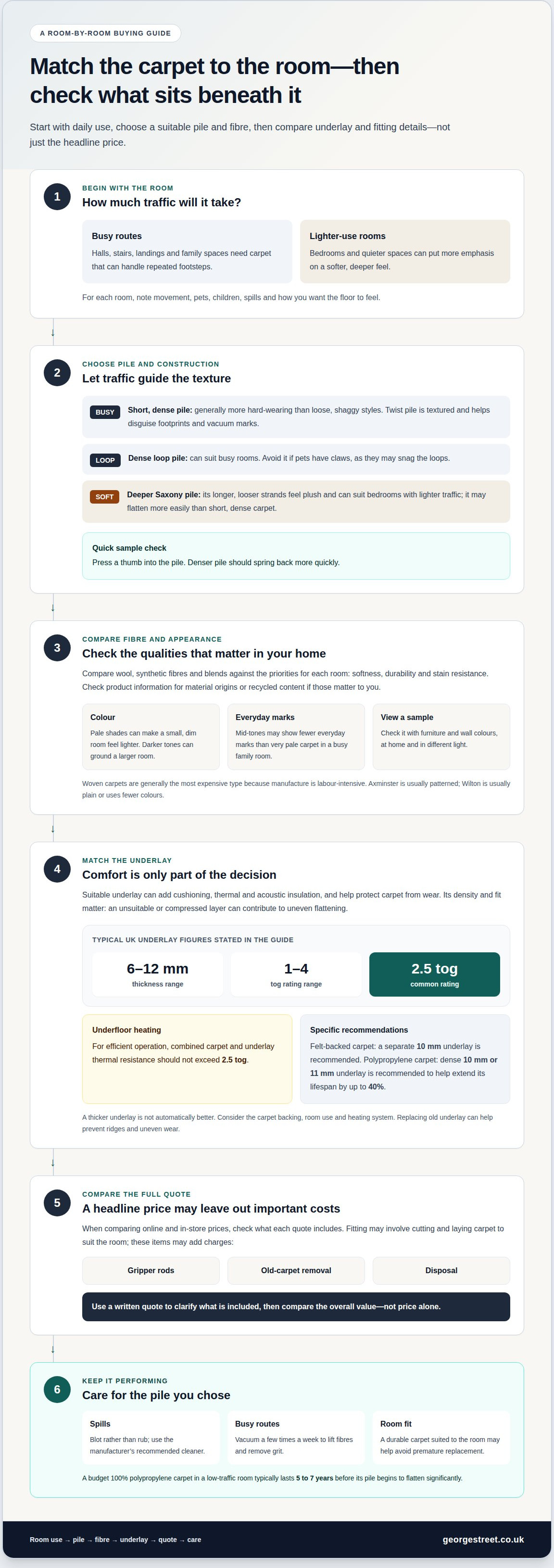
Start with the room’s traffic, then choose a pile that can keep its shape. Halls, stairs and landings need hard-wearing carpet with good pile weight and density, because constant footsteps press fibres down. Short, dense carpets generally outlast loose, shaggy styles in busy spaces. Press a thumb into a sample: denser pile should spring back more quickly.
Construction shapes both a carpet’s appearance and its everyday performance. Twist-pile carpet has fibres twisted together, creating a textured, hard-wearing surface that is less likely to show footprints or vacuum marks. Loop-pile carpet forms loops across the surface; Berber is a familiar loop style. Dense loop pile can suit busy rooms, but avoid it if you have pets with claws, which may snag the loops.
Pile height matters as much as construction. Deep pile feels plush underfoot, but can flatten more easily than short, dense carpet. Saxony has longer, looser strands, giving bedrooms a soft finish where foot traffic is lighter. It’s less durable than short, dense carpet, so is a weaker fit for a frequently used hallway. Woven carpets are generally the most expensive type because their manufacture is labour-intensive. Axminster weaving accommodates multiple colours, so Axminster carpets are usually patterned; Wilton carpets are usually plain or use fewer colours.
For stairs, children, pets and other high-traffic areas, choose a dense, hard-wearing carpet, such as short twist pile. Twist pile helps disguise visible footmarks, while loop pile can work in busy spaces without pets with claws. For a bedroom with lighter traffic, consider deeper Saxony pile. Compare samples to judge texture and colour before choosing flooring for each room.
Fitting generally involves cutting and laying carpet to suit the room. Gripper rods, old-carpet removal and disposal may add charges, so a written quote helps clarify what’s included.
For environmental and indoor-air-quality considerations, look at the carpet’s fibre, backing, expected durability and end-of-life options. Product information can help you compare material origins or recycled content. After installation, ventilating the room is a practical step. A durable carpet suited to the room may also help avoid premature replacement.
2. Is carpet underlay necessary?
Underlay can make carpet feel softer, add thermal and acoustic insulation, and help protect it from wear. UK underlay typically measures 6mm to 12mm thick, with tog ratings ranging from 1 to 4; 2.5 togs is common. A thicker option isn’t automatically better, since the carpet’s backing, room use and heating system all affect suitability.
Underlay cost depends on its type and quality. Compare the cost with the benefits you need, such as extra warmth in a living room or more cushioning in a bedroom. A luxurious feel is welcome, but the underlay must also support the carpet properly.
In busy areas, suitable underlay helps limit movement beneath the carpet and can improve comfort underfoot. It also adds insulation against sound and heat loss. Density matters: an unsuitable or worn layer may compress, allowing the carpet above it to flatten unevenly. Underlay can extend carpet life, but it needs to suit both the carpet and the room.
Replacing old underlay when fitting new carpet helps prevent ridges and uneven wear. Existing underlay may have compressed or become damaged, so reusing it can leave an otherwise fresh floor looking uneven. Felt-backed carpet is one example: a separate 10mm underlay is recommended to improve its feel and longevity.
For polypropylene carpet, a dense 10mm or 11mm underlay is recommended to help extend its lifespan by up to 40%. Underfloor heating needs a different check: for efficient operation, the combined thermal resistance of carpet and underlay should not exceed 2.5 tog. Carpet and underlay can be used over most underfloor heating systems.
When comparing carpet durability ratings and warranties, prioritise suitability for the room’s traffic and check what each warranty covers, including exclusions. A rating is useful only when it reflects the intended use; the terms matter as much as the warranty’s length.
To maintain carpet, blot spills rather than rubbing them, and use the manufacturer’s recommended cleaner. Vacuum high-traffic routes a few times a week to lift fibres and remove grit. A budget 100% polypropylene carpet in a low-traffic room typically lasts 5 to 7 years before its pile begins to flatten significantly.
3. Choosing carpet by room
Write a brief for each room before choosing colour or texture. A lounge used for family gatherings needs a different balance from a quiet guest bedroom. In a dining room, consider how chairs move across the floor and whether crumbs or spills are likely. In a child’s bedroom, comfort for play may matter more than a formal finish.
For living rooms, start with how the space is used each day. A room for reading and relaxing can prioritise softness, while one connecting the kitchen and garden needs to cope with more movement. In bedrooms, colour and texture can create a calmer mood. A subtle neutral can sit quietly beneath patterned bedding; a richer shade can make a plain room feel more intimate.
Colour affects how flooring feels in a room. Pale shades can make a small, dim space feel lighter, while darker tones create a grounded look in a larger room. Mid-tones can be a practical choice for a busy family room, where everyday marks may be less noticeable than on very pale carpet. Compare a sample with your curtains, furniture and wall colour rather than relying on a small screen image.
Lighting matters. A carpet sample can look different under shop lighting and at home, so view it in the room at different times of day. Notice how daylight and evening lamps change grey, beige or green tones. Texture also affects appearance: a smooth surface reflects light differently from a textured one, even when both carpets are the same colour.
Fibre adds another factor to the room-by-room decision. Natural fibre can bring a distinct texture and appearance, while polyester is a synthetic option often considered for bedrooms or family spaces. Compare how samples feel, how their colours work with your furnishings, and whether their surfaces suit the room’s use. For a carpet buying guide UK homeowners can follow, match materials to each room rather than choosing one fibre throughout.
Before deciding, place samples beside your main furniture and check them in the room’s natural light. For example, compare a warm neutral with a cooler grey next to the sofa and curtains. This helps you choose a colour and texture that work together, rather than relying on a showroom impression alone. A useful carpet buying guide UK readers can follow includes these room-specific comparisons.
4. Wool, synthetic fibres and wool blends
Wool, synthetic fibres and blends each bring different qualities to a carpet. Wool offers insulation and durability, and resists moisture and dirt. It’s also less flammable than man-made fibres. These qualities can suit a living room that sees everyday use, while adding natural texture beneath furniture and footfall.
Polypropylene is a synthetic fibre described as dirt- and stain-resistant, making it suitable for children’s bedrooms and playrooms. These qualities can be useful where spills and regular activity are part of daily life. Compare the feel and appearance of samples, since fibre is only one factor in how a carpet will look in the room.
A wool blend combines natural and synthetic fibres. An 80% wool and 20% nylon mix is one example. This balance brings wool into the construction alongside a man-made fibre, offering an alternative to either pure wool or a fully synthetic carpet. Check the stated blend on the product description rather than relying on a general label.
In the UK, polypropylene is described as the most popular carpet fibre, and it accounts for roughly 80% of budget carpet sales. A budget 100% polypropylene carpet in a low-traffic room typically lasts 5 to 7 years before its pile begins to flatten significantly. That makes expected room use an important part of weighing fibre options.
For a living room with regular activity, compare wool’s insulation and durability with polypropylene’s resistance to dirt and stains. Those latter qualities may be especially useful in a child’s playroom. In a quieter room, you have more scope to choose by texture and feel underfoot. The same fibre can perform differently depending on construction and foot traffic.
UK carpet materials also differ in how their fibres are made and combined. Synthetic options include polypropylene and polyester; wool is a natural fibre, while an 80/20 wool-and-nylon mix combines both. These are the main material choices here: compare their practical qualities against the room, rather than treating fibre alone as a durability measure.
Use three steps before deciding: identify the room’s traffic, choose the qualities that matter most, then compare samples and fibre descriptions. For a family room, stain resistance may be a priority; for a living room, insulation and durability may matter more. The best match is the material whose strengths suit how the room is used.
5. Online carpet prices versus high-street prices
Online listings and in-store displays show different parts of the buying decision. Online, it’s easier to compare fibre, pile and colour descriptions side by side. In store, you can handle samples and see texture directly. Neither channel alone shows the full cost: compare the same carpet specification and check what each price includes. A carpet buying guide UK shoppers can use should compare the complete purchase, not just the displayed price.
Start with the product itself. Check fibre, construction, pile and width, then compare like with like. UK carpet rolls are commonly 4 or 5 metres wide, which affects how much material a room needs and how it can be cut. A lower displayed price may not represent the same quality or specification as another listing.
Next, measure the room carefully. UK buying advice recommends adding 10cm to both the measured length and width for trimming and fitting. Work out the required amount using the roll width, since a room’s shape and doorway positions can affect the layout. An accurate measurement gives you a more meaningful comparison than relying on a broad room-size estimate.
Compare the whole order, not just the carpet. Delivery, underlay, gripper rods, removal of old flooring and fitting may appear as separate line items. An in-store quote may bundle some items, while an online checkout may list them individually. Review each breakdown to see what’s included, so a lower headline price doesn’t leave you comparing incomplete orders.
Fitting is another detail to clarify in a quote. Check whether it covers the carpet only or also includes preparation, moving furniture, door trimming and disposal of the old floor covering. The scope can change the total, even when two quotes describe similar carpet. A written breakdown makes differences visible and helps you compare the same work.
Use a simple decision process: shortlist the carpet by specification, compare samples in your home, measure the room, then review delivery and fitting details together. For example, a 5-metre roll may create a different cutting plan from a 4-metre roll in the same hallway. This carpet buying guide UK comparison comes down to matching material, coverage and included work, not merely the number shown first. The carpets and flooring range is a relevant place to consider those product choices.
George Street Furnishers: Carpets & Flooring
Once you’ve weighed room use, pile, fibre and underlay, bring those choices together in a carpet that suits your home. George Street Furnishers supplies and fits carpets and flooring, making it a natural next step as you consider the options in this guide.
Start with the room you’re furnishing. A busy hallway calls for different priorities from a quieter bedroom: durability and a practical pile may matter most in the first, while softness and colour can guide the second. Apply the same approach throughout the home. Identify the room’s traffic, the feel you want underfoot and the look that works with your furnishings.
Then focus on the material. Wool, polypropylene, polyester and wool blends each have different qualities, so compare them with the way the room is used. A carpet’s colour and texture also shape the atmosphere, from a calm, understated bedroom to a welcoming living space. Narrowing your options by these details helps you make a more considered decision than choosing by appearance alone.
Underlay and fitting are part of the finished floor, too. Consider how underlay could affect comfort, warmth and sound, and account for carpet, underlay and fitting together when reviewing your plans. If the room has underfloor heating, the combined tog rating of the carpet and underlay is important. Considering these elements alongside pile and fibre gives you a more complete specification for the space.
George Street Furnishers’ carpet and flooring supply and fitting service is a practical next step when you’re ready to choose carpet for a room. Whether you’re refreshing one bedroom or considering several rooms, keep your priorities clear: the room’s use, your preferred feel, the fibre that suits your needs and a colour that belongs in your home.
A thoughtful carpet choice can shape how a room feels each day: softer, warmer, more settled. When you’re ready to discuss your carpet plans, contact George Street Furnishers.
Frequently Asked Questions
How can I choose the right kind of carpet?
Choose a carpet that suits both the room and the people living with it. For stairs or a busy hallway, prioritise dense, hard-wearing construction; in a quieter bedroom, comfort may matter more. If pets have claws, avoid loop pile because claws can snag its loops. Before deciding, compare samples beside your furniture and consider how the carpet’s colour and texture work in the room.
Is carpet underlay necessary?
Underlay isn’t essential in every installation, but it can improve comfort and help protect carpet from wear. It may be particularly useful beneath carpet that needs extra cushioning or insulation. Check the carpet backing and the room’s heating setup before choosing a type. If you’re replacing old carpet, worn or compressed underlay can affect how evenly the new floor sits.
Does carpet add value to a home?
Carpet can make rooms feel warmer, quieter and more finished, but it doesn’t guarantee a higher sale price. Its appeal depends on condition, colour and how well it suits the home. A clean, neutral carpet may help a room feel ready to use, while worn or strongly patterned flooring may not suit every buyer. Consider comfort and upkeep alongside resale appeal.
How about man-made fibres?
Man-made fibres can be practical in rooms where spills and everyday activity are concerns. Polypropylene is described as dirt- and stain-resistant, while polyester is another synthetic option. Compare the stated fibre and construction rather than assuming every synthetic carpet performs alike. A playroom, for example, may call for easy-care qualities, while a guest bedroom could prioritise colour and feel.
How much does carpet cost?
Carpet cost depends on material, construction, room dimensions and the amount required. Underlay and fitting can also affect the total, as can delivery, old-flooring removal and other listed extras. Compare like-for-like specifications and review what each quote includes. Price per square metre is only one part of the cost, so consider the complete job before deciding.
How should I measure up?
Measure the room’s length and width, including recesses and doorways that affect the carpet layout. UK carpet-buying advice recommends adding 10cm to both the measured length and width for trimming and fitting. Record each measurement clearly, then consider how the room’s shape relates to the roll width. For stairs or unusually shaped spaces, measurements need to account for each section rather than treating the area as one rectangle.
Is Axminster or Wilton best?
Neither is universally best; choose according to the look you want. Axminster weaving accommodates multiple colours, so Axminster carpets are usually patterned. Wilton carpets are usually plain or use fewer colours. A patterned Axminster can bring detail to a formal room, while a simpler Wilton may suit a quieter scheme. Compare the design with your existing furnishings and décor.
Should I opt for wool?
Choose wool if its natural feel and practical qualities suit the room and your priorities. Wool carpet offers insulation and durability, and resists moisture and dirt. It’s also less flammable than man-made fibres. Compare wool with a synthetic option or wool blend, considering the room’s traffic, the carpet’s construction and your preferred texture. A fibre sample can help you judge its appearance and feel.