


A small sofa can make a compact room feel considered rather than crowded. The right 2-seater couch for a small space gives you a comfortable place to unwind while leaving room for the details that make a home feel like yours.
It’s natural to focus on appearance first, but a sofa’s proportions, materials and construction determine how well it fits everyday life. A graceful silhouette may suit a snug living room, while the seat depth, upholstery and support affect how it feels and works with your routine.
In this guide, you’ll learn how to weigh style against available space, what to consider when choosing fabric or other materials, and which construction details matter for comfort and lasting use. We’ll also look at how a two-seater can bring balance to a studio, a small lounge or a cosy corner, so you can choose an option that feels at home in your room.
Key Takeaways
- Measure the room and access route so your sofa fits comfortably, not just on paper.
- Compare upholstery options by how they feel, suit your routine and respond to everyday use.
- Consider whether a reclining design or sofa bed suits your space and how you’ll use it.
- Look beyond appearance to frame and cushion construction when weighing comfort and durability.
- Explore how a compact sofa can bring practical seating and a considered style to a smaller room.
Why Choose a 2 Seater Sofa?
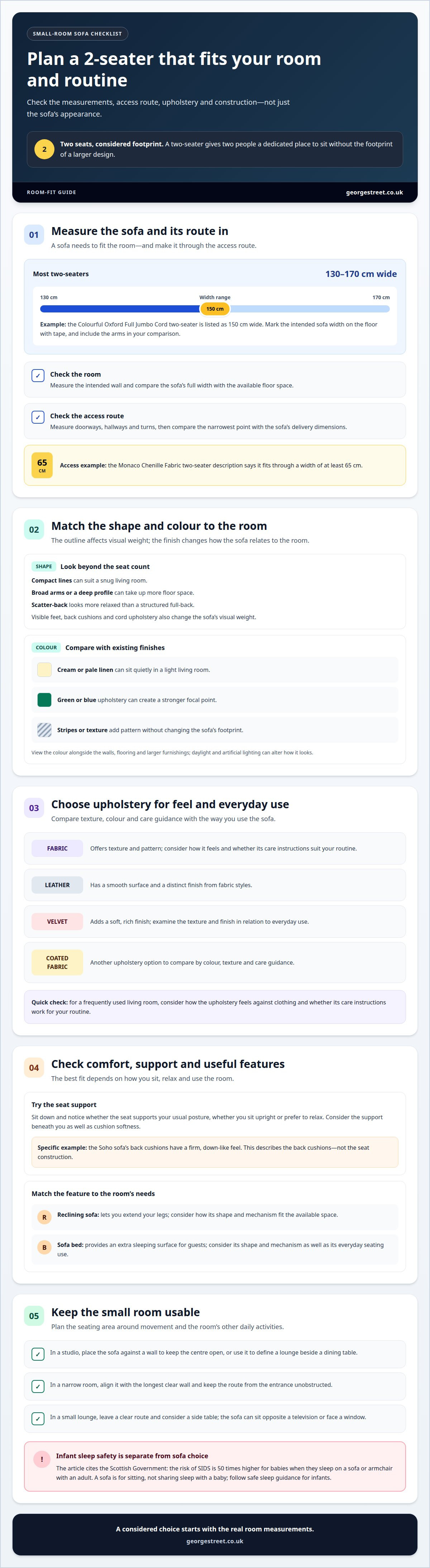
A two-seater sofa gives two people a dedicated place to sit without taking up the footprint of a larger design. Its upholstery, seat feel and features determine how well it suits your daily routine.
Upholstery Material Options
Fabric, leather, coated fabric and velvet each have a distinct look and feel. Fabric offers texture and pattern, leather has a smooth surface, and velvet adds a soft, rich finish. Coated fabric provides another option. Compare each material’s colour, texture and care guidance with how you’ll use the sofa.
Function matters too. A reclining sofa lets you extend your legs, while a sofa bed provides an extra sleeping surface for guests. These designs can differ in shape and mechanism from a standard sofa, so consider how each function will fit your available space. Choose for the room’s everyday needs, not appearance alone.
Fabric and Seat Construction
The Soho sofa’s back cushions have a firm, down-like feel. This describes the back cushions, not the seat construction. When comparing sofas, consider the support beneath you as well as cushion softness. Sit down and notice whether the seat supports your usual posture, whether you sit upright or prefer to relax.
Fabric and Cushioning Choices
Pair the fabric’s texture and colour with the cushion feel you prefer. A patterned fabric can become a focal point, while a plain finish lets the sofa’s shape stand out. Cushion softness is personal: the Soho’s firm, down-like back cushions offer one point of comparison. Think about how long you usually sit and whether you prefer a firmer or softer feel.
Let practical use guide your choice. For a frequently used living room, consider how the upholstery feels against clothing and whether its care instructions suit your routine. Velvet, leather and fabric each have distinct textures, so examine the finish and seams. In a guest room, a sofa bed combines seating with an extra sleeping function.
Keep infant sleep safety separate from upholstery choice. According to the Scottish Government, the risk of SIDS is 50 times higher for babies when they sleep on a sofa or armchair with an adult. A sofa is for sitting, not sharing sleep with a baby. Choose its material and cushions for adult seating needs, while following safe sleep guidance for infants.
Two-seater sofa styles, colours and sizes
Shape, colour and dimensions all affect how a two-seater looks and feels in a living room. Compare its outline with your available floor space and the room’s existing colours.
Sofa Styles and Designs
A two-seater may have clean, compact lines or a fuller shape with rounded arms. Details such as visible feet, back cushions and cord upholstery change its visual weight. For example, a scatter-back design looks more relaxed than a structured full-back sofa. Consider the arms and back as well as the seat, since these affect the silhouette and comfort. Leather upholstery offers another distinct finish, with leather sofa designs providing a different look from fabric styles.
Colour Options
Choose a colour in relation to the room’s walls, flooring and larger furnishings. Cream or pale linen can sit quietly in a light living room, while green or blue upholstery creates a stronger focal point. A stripe or textured fabric adds pattern without changing the sofa’s footprint. For a smooth, darker finish, leather upholstery options can also suit a considered colour scheme. View the colour alongside existing finishes, since daylight and artificial lighting can alter its appearance.
Dimensions and Measuring for Fit
Most two-seater sofas measure between 130 cm and 170 cm wide. One listed Colourful Oxford Full Jumbo Cord two-seater measures 150 cm wide, a useful example when planning a compact layout. Measure the intended wall, then mark the sofa width on the floor with tape. Include the arms in your comparison, not just the seating area.
Measure the route into the room as well. Check doorways, hallways and turns, then compare the narrowest point with the sofa’s delivery dimensions. The Monaco Chenille Fabric two-seater description says it fits through a width of at least 65 cm. A clear route helps prevent a promising room layout from becoming an access problem.
Models and Prices
Compare individual models by dimensions, upholstery and design details before weighing their prices. For instance, the 150 cm Colourful Oxford example gives a concrete width, while the Monaco description highlights access through a 65 cm opening. These details help distinguish compactness from a sofa’s overall look. Match the model’s measurements to your room plan first.
Prices vary between sofa models and can change, so compare each current listing with the sofa’s size and features. Avoid choosing by colour alone: a patterned design may draw the eye, while a simple silhouette can blend into a small living room. Check the practical details against your measurements before settling on a style.
Two-seater sofas for smaller rooms
A two-seater gives two people a defined place to sit without filling a compact room. In a studio, a small 2-seater couch can leave space for dining, working or movement.
Suitability for Smaller Rooms
In a studio apartment, a two-seater can anchor the living area without dominating the room. Place it against a wall to keep the centre open, or use it to define a lounge beside a dining table. It provides a shared spot for reading or relaxing while leaving room for other daily activities.
Consider the sofa’s full shape, not just its seat count. Broad arms or a deep profile can take up more floor space than a pared-back design. In a narrow room, align the sofa with the longest clear wall and keep the route from the entrance unobstructed. This makes the seating area easier to use.
Fit for Lounges and Living Rooms
A smaller lounge needs both seating and a clear route through the room. A two-seater can sit opposite a television or face a window, with space left for a side table. In a living room shared with a dining area, place the sofa at the edge of the lounge zone to distinguish the two spaces.
For a reading corner, pair a two-seater with a floor lamp instead of adding another bulky chair. In a compact family room, keep the space in front of the sofa clear for everyday movement. A small two-seater couch can also sit beneath a window, provided its back doesn’t block the light or interfere with the curtains.
Plan around the room’s essentials. A studio, for example, may need space for a sofa, dining table and clear access to storage. Sketch these items on a simple floor plan, then mark where the sofa will go. This shows whether the arrangement supports daily living or leaves awkward gaps between furniture.
Think about how the room’s use changes throughout the day. A two-seater can provide evening comfort in a lounge that also serves as a daytime workspace. Keep it clear of doors and cupboards that open frequently. In a small living room, this practical detail can matter as much as appearance.
Choose a layout that suits the room’s main purpose. A sofa facing a window creates a quiet place to pause; one facing a television suits shared viewing. In a studio, placing it with its back towards the bed can gently separate sleeping and living areas without adding a partition.
Durability and ease of cleaning
Regular use leaves marks on furniture: crumbs collect along seams, and pressure gradually changes seat cushions. Choose a durable two-seater to suit the room’s daily rhythm, whether it’s for quiet reading or evenings watching television together. Inspect the upholstery seams, cushion covers and exposed frame joints. These details can show where wear may become visible first.
Start with the care instructions for the specific upholstery. Fabric, velvet, leather and coated fabric, for example, can require different cleaning products and methods. Don’t assume one cleaner suits every surface. Keep the manufacturer’s guidance with the sofa details and consult it before treating a mark. A small spill may need a different response from accumulated dust or everyday grime.
For a fresh drink spill, act promptly and follow the fabric’s care guidance. Gently blotting with a clean cloth can help avoid pushing liquid deeper into the fibres. Rubbing may spread the mark. For leather, use a method suited to that finish. Don’t apply a household spray simply because it worked on another piece of furniture.
Routine cleaning helps stop loose dirt building up around seat edges and beneath cushions. Remove crumbs from gaps with a suitable vacuum attachment, then check the seams for trapped debris. If cushions are removable, follow their care labels before washing or repositioning them. These simple steps help keep the seating neat without harsh treatments.
Durability also depends on how the sofa is used. A reading corner may see steady use on one seat, while a family lounge brings pressure across the whole sofa. Rotate loose cushions where the design allows, and avoid standing or kneeling on the seat. Keep sharp buckles and rough objects from scraping the upholstery during everyday use.
Sunlight and placement matter. A sofa beside a bright window may get more direct light than one against an interior wall. Curtains or blinds can reduce exposure when the room is unused. Consider radiators and other heat sources too, as placing furniture close to them can affect comfort and upholstery over time.
Before choosing, picture the cleaning routine in your home. Velvet may suit a calm sitting room, while a busy family space benefits from upholstery with manageable care instructions. Check the seams, cushion access and care guidance together. This practical comparison helps you match appearance with the maintenance your household can manage.
Frame and cushion considerations
A sofa’s frame supports its shape, while the cushions affect comfort and everyday use. Check both before choosing a compact design, particularly if it will be your main seating.
Begin by examining the frame’s visible construction. Look beneath the seat and around the back for joins, fixings or signs of movement. Gently press each arm, then sit down and shift your weight. A stable frame should feel steady during these checks, without noticeable creaking or rocking.
Next, consider how the frame meets the floor. The feet affect both the sofa’s appearance and the clearance beneath it. Raised feet leave visible floor around the base, while a low plinth creates a more grounded outline. In a smaller room, this visual difference can change how substantial the sofa feels.
Give the cushions an equally close look. Sit in the centre and near each edge, noticing whether the support feels consistent. Compare the seat cushion with the back cushions, as they serve different purposes. A softer back may feel inviting, while firmer seat support can suit longer periods of reading or conversation.
Removable cushions make routine care and repositioning easier. Check how each cushion fits and whether it has a care label. If the cushions are fixed, inspect the seams and upholstery where the seat meets the arms. These areas experience regular contact during everyday use.
Revisit your room measurements while considering the sofa’s proportions. A deep seat can reduce open floor space in front, even if the sofa fits against the wall. Mark the sofa’s full footprint with tape, then sit on a chair within that outline. This helps you judge the space needed for your knees, movement and a nearby table.
Match the construction to your routine. A sofa used for evening lounging needs a different feel from occasional guest seating. Try your usual posture, whether you sit upright with a book or lean back to relax. Notice whether the cushions shift, the seat feels balanced and the frame remains steady.
Use these checks to compare the details that matter in your home. Explore sofas suited to your space and consider how their frames and cushions support your everyday comfort.
George Street Furnishers
George Street Furnishers can help you compare sofa options for your room. Use the guidance above to narrow your priorities: overall width, depth, upholstery, cushion feel and room to move comfortably. Bringing these considerations together makes it easier to focus on designs that suit your home and daily routine.
Start with the room’s practical requirements. A two-seater for a studio may need to leave space for dining or working, while a small lounge may need a clear route between the door and window. Keep your measurements and preferred layout in mind as you compare sofas. This way, you can judge how each design fits your living space, not just how it looks.
George Street Furnishers offers sofas and furniture for your home. As you explore the selection, compare the features that matter most. Does the shape leave enough room beside a side table? Does the upholstery suit your colour scheme? Consider the whole sofa, including its arms, back and cushions, rather than judging by seat width alone.
It can help to distinguish essentials from finishing touches. Perhaps a compact outline matters more than a statement colour, or easy-care fabric matters more than decorative details. Keep these priorities alongside your room measurements. If a sofa bed or reclining function is important, consider how it will affect the space when in use. This keeps your choice grounded in the way you live.
Thoughtful furniture choices bring comfort and character to a home without asking a small room to do too much. A well-chosen two-seater can create a welcoming place to pause, talk or unwind at the end of the day. Use your measurements, preferred materials and seating needs to guide you as you explore the options.
For help with your next step, contact George Street Furnishers.
Make room for a more considered choice
Let the way you live guide your final decision. A compact sofa should feel at ease in the room, not simply fit within its boundaries. Picture an ordinary evening: where you’ll sit, what you’ll reach for and how you’ll move through the space. That everyday scene can help you decide which details matter most.
Choosing a small 2-seater couch is also an opportunity to give a room its own character. A calm, understated design can let artwork or textiles take focus; a distinctive colour can become the room’s signature. Aim for a choice that feels personal, while still serving the room’s practical needs.
When you’re ready to explore sofa options, George Street Furnishers can be your next step. Bring your priorities into the decision, and take time to find a piece that feels right for your home. Contact George Street Furnishers to continue your search with confidence.
Frequently Asked Questions
How does a 2 seat sofa enhance your living area?
A two-seater creates a shared place to sit while keeping the room flexible. In a studio, it can distinguish the lounge from a desk or dining area. In a smaller living room, a side table beside the sofa gives books or a lamp a natural home. This helps organise the space without adding another large piece of furniture.
What should you consider when selecting your sofa?
Consider how you’ll use the sofa, how it fits the room and what feel you prefer. A reading nook might suit a different seat depth from a space used for conversation. Check access through hallways and stairs, too. For broader inspiration as you weigh those choices, home and furniture articles can sit alongside your own room plan.
What are the dimensions of a small 2 seater sofa in the UK?
Most two-seater sofas measure between 130 cm and 170 cm wide, though dimensions vary by design. Check the product’s full measurements, including height and depth, since a sofa’s footprint extends beyond its seat width. Compare those details with the available floor area and the positions of radiators, doors and other fixed features before settling on a model.
How much does a small 2 seater sofa cost in the UK?
The price depends on the model and its features. That is the listed price for that particular sofa, not a general price for every compact two-seater. Compare the current listing with the design and features you need.
Which small 2 seater sofas are best for narrow rooms or flats?
Look for a design that leaves a clear route through the room. Slim arms can preserve usable seating width, while a simple outline may feel less imposing in a narrow flat. Consider the sofa alongside other essentials, such as a desk or dining table. The right fit supports your routine without blocking doors or storage.
How do I measure a doorway and room before buying a 2 seater sofa?
Measure the space, including its usable width and depth, and note fixed obstacles such as radiators. For access, measure the narrowest doorway, hallway section and stair landing, allowing for turns along the route. Compare these measurements with the sofa’s full dimensions and delivery access details. A floor plan or tape outline can help you picture where it will sit.
Are small 2 seater sofas available with removable or washable covers?
Care arrangements vary between sofas, so check the product information for the specific design. Removable cushions don’t necessarily have covers that can be taken off or washed. If easy cleaning matters, look for clear instructions on removing covers and caring for them. For fixed upholstery, follow the recommended cleaning guidance rather than assuming a household product will suit every fabric.
What materials and upholstery are best for a small sofa used every day?
The best upholstery depends on how the sofa feels to you and the care routine you prefer. Fabric comes in varied textures and patterns, leather has a smooth finish, and velvet brings a plush look. Coated fabric is another option. Compare the care guidance and examine the seams and seat areas, especially if several people will use the sofa daily.